Multi-Agency Operations Need Product Roadmaps: Build Like Tech
Why Multi-Agency Operations Need Product Roadmaps: Building Your Internal Tool Stack Like a Tech Company
Here's a reality check I wish someone had given me earlier in my agency career: your internal tools and processes are your competitive moat. Not your creative talent. Not your client relationships. Your systems.
After acquiring several agencies through Aragon Holdings and operating them under our Marketers in Demand platform, I've seen firsthand what separates agencies that scale smoothly from those that hit the ceiling hard. The difference isn't revenue or team size—it's how systematically they approach building their internal infrastructure.
Most agency founders treat internal tool development like an afterthought. They'll spend months perfecting a client deliverable but throw together internal processes with duct tape and good intentions. Then they wonder why onboarding new team members takes forever, why project handoffs are chaotic, and why scaling past 15-20 people feels impossible.
The agencies that break through this ceiling? They think like product companies about their own operations. They build process libraries, automation systems, and development roadmaps with the same rigor they apply to client work. According to Harvard Business Review's research on operational excellence, companies that systematize their operations see 3x higher productivity gains than those relying on individual performance alone.
In this post, I'll show you exactly how we've implemented this approach across our portfolio—and why it's become non-negotiable for any agency serious about growth.
The Hidden Cost of Ad Hoc Operations
Before diving into solutions, let's acknowledge the problem most agency owners don't want to admit: their operations are held together by tribal knowledge and individual heroics.
I see this pattern in almost every agency we evaluate for acquisition. The founder knows exactly how everything works. Maybe one or two senior team members have pieces of the puzzle. But try to document how a project flows from sales to delivery? Or explain which automations trigger when a new client signs? Good luck.
This isn't just an operational inefficiency—it's a growth killer. When your processes exist only in people's heads, several things happen:
- New hires take 3-6 months to become productive instead of 30-60 days
- Project delivery becomes inconsistent as team members interpret requirements differently
- Founders become bottlenecks because they're the only ones who understand the full picture
- Scaling requires exponentially more management overhead instead of leveraging systems
The breaking point usually comes around $1-2M in revenue. That's when agencies either systematize or stagnate.
Research from the Small Business Administration shows that 70% of businesses fail to scale past their initial growth phase due to operational bottlenecks rather than market factors.
Building Your Process Library: The Foundation of Scale
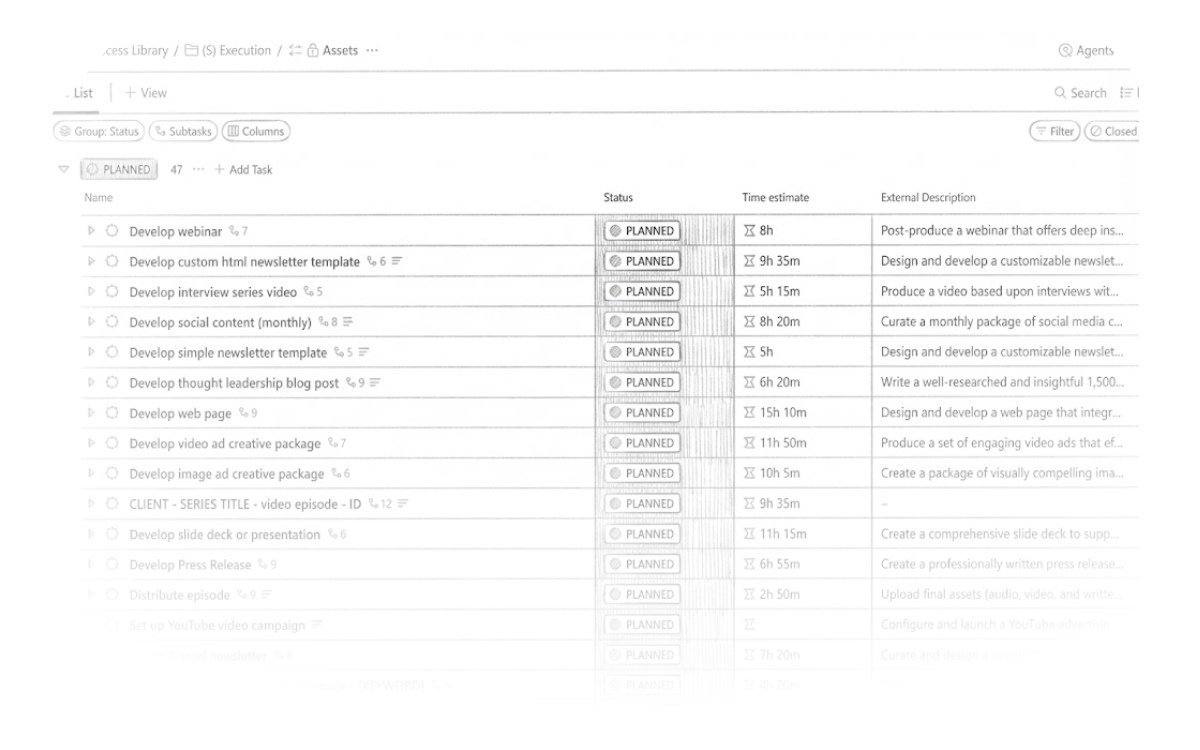
The first step in thinking like a product company is creating what we call a Process Library—a centralized repository of standardized workflows that anyone on your team can access and execute.
Across our portfolio agencies, we use ClickUp as our process library platform, but the tool matters less than the methodology. Here's how we structure it:
Parent Task Templates serve as our main process categories—things like "New Client Onboarding," "Monthly Strategy Review," or "Campaign Launch Sequence." Each parent task contains all the subtasks, dependencies, and resources needed to complete that process from start to finish.
Subtask Templates break down each process into specific, actionable steps. Instead of "Set up campaign," we'll have subtasks like "Create UTM parameter spreadsheet," "Configure conversion tracking in GA4," and "Build initial audience segments in ad platform."
The key is making these templates detailed enough that someone with basic competency can execute them without hunting down the team member who "usually handles this stuff."
But here's what most agencies get wrong: they build these templates once and never touch them again. The real power comes from treating your process library like living documentation. After every project, we have team members flag what worked, what didn't, and what could be improved. Those insights get incorporated into the next version of the template.
This continuous improvement approach means our processes actually get better over time instead of becoming stale documentation that nobody uses.
Creating Your Automation Library: Scaling Without Chaos
Once you have standardized processes, the next step is automating the repeatable parts. But here's where most agencies create a different kind of chaos—automation sprawl.
In our portfolio, teams use everything from Zapier and Make to n8n and custom API integrations. Different team members build automations in different tools, often without documenting what they've created or how it connects to other systems.
The result? A web of automations that nobody fully understands. When something breaks, you're playing detective instead of fixing a documented system. When you want to onboard a new team member, they have to reverse-engineer workflows that should be transparent.
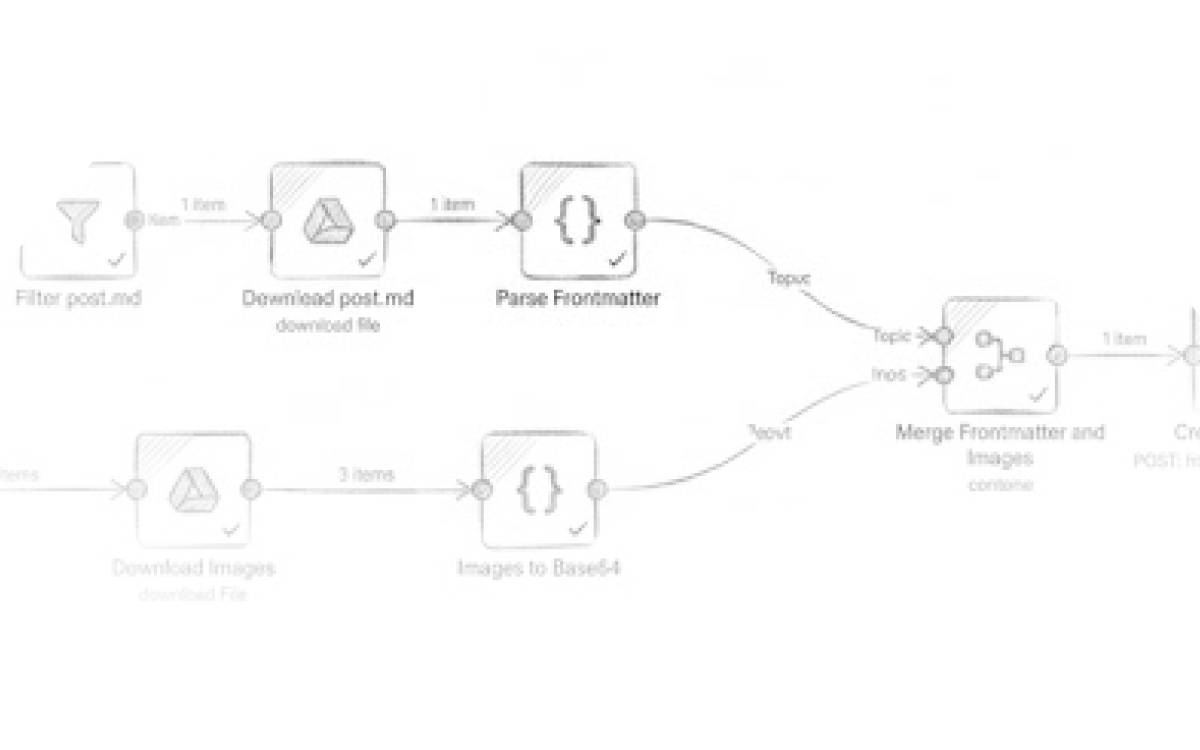
Our solution is an Automation Library that works alongside our Process Library. Every automation gets documented with:
- Clear trigger conditions (what starts this automation?)
- Step-by-step workflow (what happens and in what order?)
- Connected systems (which tools and databases are involved?)
- Failure scenarios (what happens when something goes wrong?)
- Owner information (who built this and who maintains it?)
This isn't just documentation for documentation's sake. When you're operating multiple agencies or multiple service lines within one agency, this visibility becomes critical. A change to your CRM structure might break automations across three different workflows. Without proper documentation, you won't know until clients start complaining.
The goal is creating what I call "automation transparency"—anyone on your team should be able to understand how your systems work together, even if they didn't build them.
Developing Your Internal Product Roadmap
Here's where most agencies completely miss the mark: they treat internal tool development as a side project instead of a strategic initiative.
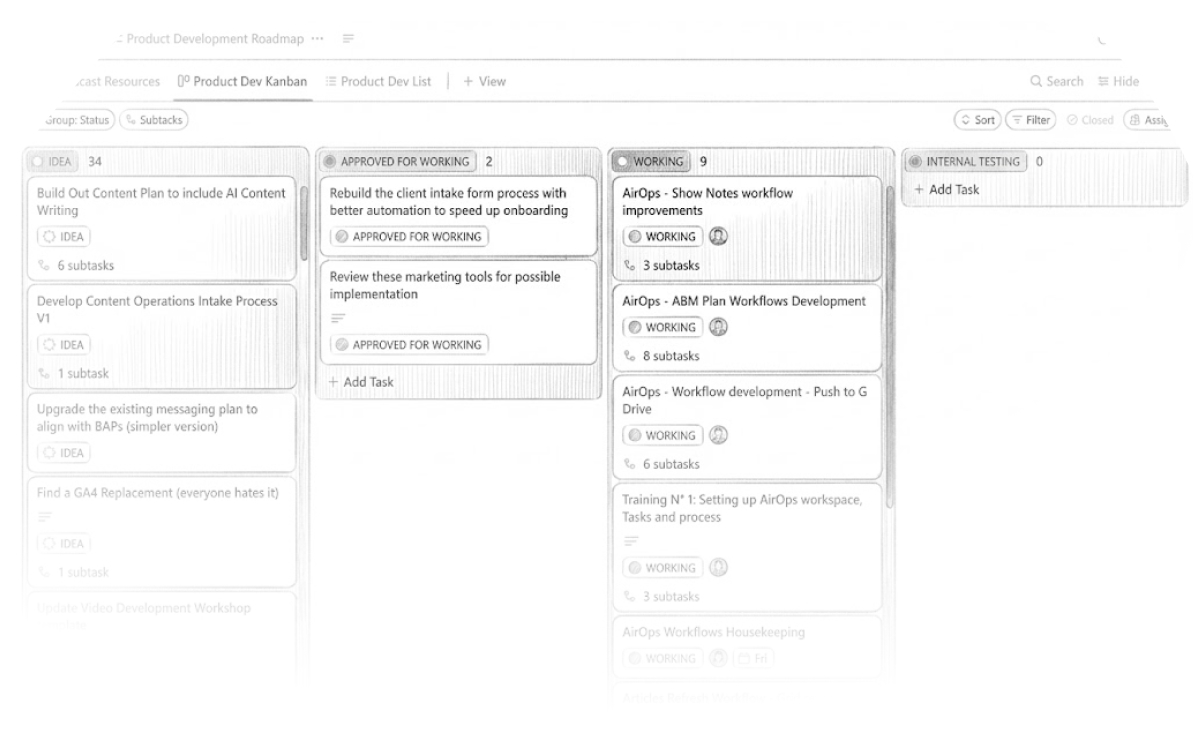
Successful agencies approach internal development the same way SaaS companies approach product development—with roadmaps, prioritization frameworks, and dedicated resources. The Product Management Institute found that organizations applying product management principles to internal operations see 40% faster project completion rates.
We use a simple impact vs. effort matrix to prioritize internal projects:
High Impact, Low Effort projects get built immediately. These are usually process standardizations or simple automations that save time across multiple projects.
High Impact, High Effort projects go on our roadmap with dedicated timelines and resources. These might be custom dashboards, client portal improvements, or integrated reporting systems.
Low Impact projects—regardless of effort—get deprioritized unless there's a compelling strategic reason.
The critical piece most agencies miss is dedicating actual project management resources to internal development. You can't treat systems building as something people do "when they have time." It needs ownership, deadlines, and accountability just like client work.
In our portfolio, we assign specific team members to internal product development with protected time each week. These aren't necessarily developers—often our best internal tools come from team members who understand the operational pain points and can create elegant solutions.
Implementation: Getting Started Without Overwhelming Your Team
If you're reading this thinking "this sounds great but we're barely keeping up with client work," I get it. The key is starting small and building momentum.
Week 1-2: Process Audit Document your top 3 most common workflows exactly as they exist today. Don't try to improve them yet—just capture current state.
Week 3-4: Template Creation Turn those documented workflows into reusable templates in whatever project management tool you're already using.
Week 5-6: Automation Inventory List every automation currently running in your business, what it does, and who built it. This alone will probably reveal some surprises.
Week 7-8: Quick Wins Identify the highest-impact, lowest-effort improvements you can make to existing processes or automations.
The goal isn't perfection—it's creating a foundation you can build on. Once your team sees the value of systematized processes, they'll start contributing ideas and improvements naturally.
Key Takeaways: Your Operations Are Your Product
After working with dozens of agencies through acquisitions and operations, the pattern is clear: agencies that systematize their operations outperform agencies that rely on individual talent and heroics.
Here are the non-negotiables:
Treat internal tool development like product development. Use roadmaps, prioritization frameworks, and dedicated resources. Your operations deserve the same strategic thinking you apply to client work.
Document everything, but make it living documentation. Static process docs become shelf-ware. Build feedback loops that improve your systems over time.
Standardize before you automate. Don't automate broken processes. Get your workflows right, then make them faster.
Assign ownership. Someone needs to be responsible for internal systems development, or it won't happen consistently.
The agencies that embrace this approach don't just grow faster—they become more valuable, more scalable, and frankly, more enjoyable to operate. Your future self (and your team) will thank you for building the foundation now.
Written by

Tristan Pelligrino
Partner at Aragon Holdings. Built and scaled multiple agencies before transitioning to acquisitions.