When to Implement EOS for Your Agency: Start Early

When to Implement EOS for Your Agency: Lessons from Starting Early (And Why Any Framework Beats No Framework)
I get asked about strategic planning frameworks constantly. Agency founders want to know: "When should we implement EOS?" "What's the right revenue threshold?" "How many team members do we need first?"
The conventional wisdom says wait until you hit $2M in revenue and have 10-15+ team members. That's when most EOS consultants recommend bringing in the Entrepreneurial Operating System.
I ignored that advice completely.
Nine years ago, when we were building Motion from the ground up, I implemented EOS from day one—long before we hit those traditional thresholds. Looking back, it was one of the smartest operational decisions we made. Here's what I learned about timing, frameworks, and why starting early might be the competitive advantage your agency needs.
Why the "Wait Until You're Bigger" Advice Misses the Mark
The standard guidance around EOS timing comes from a risk-averse consulting playbook. The thinking goes: smaller agencies don't have the complexity to justify a formal operating system, and they lack the resources to implement it properly.
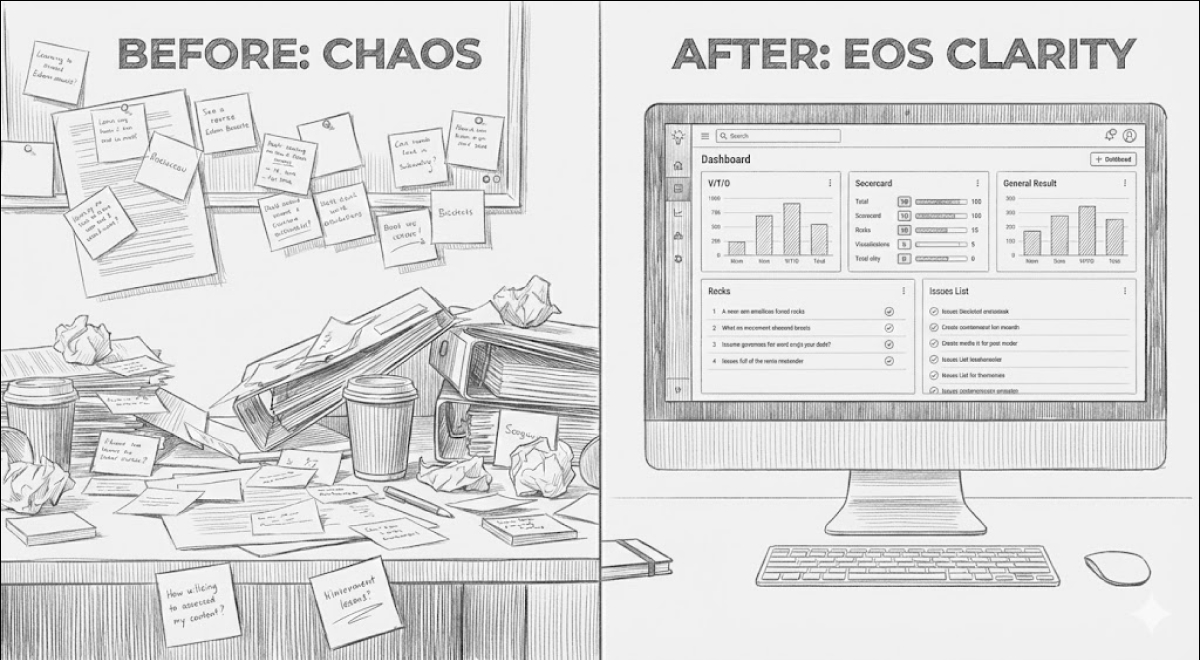
This misses a fundamental truth about agency operations: chaos doesn't wait for you to reach $2M in revenue.
In my consulting days at Oracle, IBM, and PwC, I saw the same pattern repeatedly. Companies that implemented systems and frameworks early—even when they seemed "too small" for them—consistently outperformed those that waited until complexity forced their hand.
The reason is simple: frameworks create consistency, and consistency creates scalability. When you're running on ad-hoc processes and "whatever works today" thinking, every new client, every new hire, every new project becomes a custom problem to solve. That's not sustainable growth—that's organized chaos.
When we started Motion, I knew we were either going to build something scalable from the beginning, or we were going to create another agency that maxed out at whatever the founders could personally manage. EOS gave us the structure to choose scalability.
The Framework Matters Less Than Having a Framework
Here's the insight that changed how I think about operating systems: having any consistent framework is infinitely more valuable than having no framework at all.
I've seen agencies succeed with EOS, others thrive with Scaling Up, and some build custom systems that work perfectly for their specific needs. The common thread isn't which methodology they chose—it's that they chose something and stuck with it.
The magic happens when you create consistent touchpoints, accountability measures, and decision-making processes that everyone on your team understands and follows.
This systems thinking approach comes from my technical background. In enterprise software implementations, we never debated whether to have an architecture—we debated which architecture best served the specific requirements. The same principle applies to agency operations.
EOS works well for agencies because it addresses the three planning horizons that matter most:
- Quarterly planning for immediate execution and course correction
- Annual planning for strategic initiatives and major operational changes
- Long-term planning (3, 5, or 10-year vision) for sustainable growth and exit planning
But the specific methodology isn't magic. The magic happens when you create consistent touchpoints, accountability measures, and decision-making processes that everyone on your team understands and follows.
Starting EOS Early: What Actually Happens
When we implemented EOS from the beginning at Motion, we were a fraction of the size that most consultants recommend. Here's what that early implementation actually looked like:
The Good: We never had to unlearn bad habits. Every process, every hire, every client onboarding happened within a structured framework. Our team meetings had consistent agendas. Our quarterly planning actually drove quarterly execution. When we did scale, we scaled systematically rather than chaotically.
The Challenging: Some EOS tools felt oversized for our immediate needs. Creating 10-year visions when you're not sure about next quarter can feel abstract. Certain accountability measures seemed formal for a small, tight-knit team.
The Unexpected: The framework became our competitive advantage in client conversations. When prospects asked about our project management approach or how we'd integrate with their team, we had concrete, systematic answers. We weren't selling creativity and hoping for the best—we were selling predictable, scalable results.
The biggest surprise was how EOS helped with early hiring decisions. Instead of hiring based on gut feeling or immediate project needs, we hired based on our organizational chart and long-term vision. This meant less turnover, better cultural fit, and team members who could grow with the agency.
Making Early Framework Implementation Work
If you're considering implementing EOS (or any operating system) before you hit traditional size thresholds, here are the practical lessons from doing it successfully:
Start with the planning rhythm, not all the tools. Quarterly planning sessions and weekly leadership team meetings create immediate value. The more detailed organizational tools can evolve as you grow.
Focus on consistency over perfection. Your first quarterly rocks might be basic. Your initial organizational chart might have overlapping roles. That's fine—the value comes from having these conversations regularly and systematically.
Adapt the framework to your current reality. If you're a three-person team, your leadership team meeting might be the whole company meeting. If your 10-year vision feels impossible to articulate, start with a three-year vision and build from there.
Document everything, even when it feels obvious. When it's just you and two other people, your processes feel obvious and natural. When you're at eight people six months later, those "obvious" processes have become tribal knowledge that new hires have to guess at.
Use the framework for client work, not just internal operations. EOS principles around accountability, measurables, and systematic problem-solving work brilliantly for client engagements. This creates additional ROI from your framework investment.
The Acquisition Perspective: Why Systematic Agencies Win
Now that I'm on the other side of the table, evaluating agencies for acquisition at Aragon Holdings, I can tell you exactly how early framework implementation impacts agency value.
Agencies with systematic operations—regardless of which specific framework they use—consistently command higher multiples and smoother transaction processes.
When I'm reviewing an agency's operations, I'm looking for:
- Consistent planning and review cycles
- Clear accountability structures
- Documented processes that don't depend on founder knowledge
- Systematic approaches to client delivery and team management
Agencies that implemented these systems early, even when they were "too small" for them, have built valuable, transferable business assets. Agencies that waited until they "needed" systems often have higher revenue but lower systematic value.
According to research from the Exit Planning Institute, businesses with documented systems and processes sell for 20-40% higher multiples than those dependent on owner knowledge and relationships.
From a succession planning perspective, early framework implementation creates optionality. Whether you want to sell, bring in partners, or transition leadership to your team, systematic operations make all of these paths more viable and more valuable.

Key Takeaways: Your Next Steps
After implementing EOS early at Motion and now evaluating dozens of agencies at various stages of systematic maturity, here's what I recommend:
Don't wait for permission from revenue thresholds. If you're serious about building a scalable agency rather than a consulting practice with employees, implement a framework now. The consistency and systematic thinking will accelerate your path to those revenue milestones.
Choose your framework based on your specific needs, not industry recommendations. EOS works well for agencies, but Scaling Up, custom systems, or other methodologies might fit your situation better. The key is choosing something comprehensive and sticking with it.
Start with planning rhythms and accountability structures. These create immediate operational value and establish the foundation for more sophisticated framework elements as you grow.
View framework implementation as a competitive advantage, not an operational overhead. Systematic agencies win more clients, retain better talent, and create more valuable business assets than their ad-hoc competitors.
The question isn't whether your agency is big enough for a framework. The question is whether you're building something systematic and scalable, or just managing organized chaos until something breaks.
Choose systems. Choose early. Your future self—and your eventual exit strategy—will thank you.
Written by

Tristan Pelligrino
Partner at Aragon Holdings. Built and scaled multiple agencies before transitioning to acquisitions.